
- Home
-
प्रमुख समाचार
 The Veterinary Association of India (VAI) Marks World Animal Day with a Call for Compassionate, Science-Based Animal Care
Pashu Sandesh, 05 October 2026 International webinar highlights…
 The Architect of the Roar: Honoring Kailash Sankhala on International Tiger Day
Pashu Sandesh, 29 July 2026
 A Veterinarian’s Battle: The Untold Story Behind Operational Challenges of NADCP
Pashu Sandesh, 28 July 2026
-
बड़े मुद्वे
 Victory for UP Vets as Government agrees to table NPA proposal within one month in the cabinet meet
Pashu Sandesh, 04 October 2017
-
एक्सक्लूसिव रिपोर्ट
 Veterinary Associations of India- Himachal Pradesh Veterinary Officers Association (HPVOA)
Pashu Sandesh, 26 October 2017
-
डेयरी
 अमित शाह ने कोलकाता में किया विश्व के सबसे बड़े दही उत्पादन संयंत्र का भूमि पूजन
Pashu Sandesh, 19 July 2026…
-
कैंपस
-
पोल्ट्री
-
वाइल्ड लाइफ
 अंतरराष्ट्रीय बाघ दिवस: 'प्रोजेक्ट टाइगर' के सूत्रधार कैलाश सांखला और भारत की एक ऐतिहासिक उपलब्धि
Pashu Sandesh, 29 July 2026
 The valedictory ceremony of the Wildlife week organised at National Zoological Park Delhi
Pashu Sandesh, 8 October 2021
 राष्ट्रीय प्राणी उद्यान, दिल्ली में आयोजित 67वें वन्यजीव सप्ताह का समापन समारोह
Pashu Sandesh, 8 October 2021
-
एनिमल वैलफेयर
 उ.प्र. गौशाला स्वावलंबन अभियान:मुख्यमंत्री योगी ने प्रयास की सराहना
Pashu Sandesh, 29 जनवरी 2026 डॉक्टर आर बी…
 पशु मित्र संपादकीय टीम में चार समर्पित पशु प्रेमियों की नियुक्ति, संपादकीय बोर्ड अन्य प्रतिभाओं की खोज में : पशु मित्र पत्रिका
Pashu Sandesh, 24 jan 2026 देश की जानी-मानी…
 पशु प्रेमियों द्वारा शहर में पशु टीकाकरण कार्यक्रम में चारु चौधरी ने महिला प्रकोष्ठ के लिए अनुपमा द्विवेदी के नाम घोषित किया-इस अवसर पर एडबलूबीआई,…
Pashu Sandesh, 02 July 2025 गोरखपुर (उत्तर प्रदेश):…
 लखनऊ शहर में बेसहारा पशुओं के लिए 'जीव आश्रय'एक आशा की किरण,संस्था ने गत वर्ष 141,536 से अधिक जानवरों को बचाया
Pashu Sandesh, 05 April 2025 डॉ. आर.बी. चौधरी…
 समस्त महाजन जल्द ही 2 एम्बुलेंस के साथ 24 घंटे पशु बचाव सेवा शुरू करने जा रहा है - राष्ट्रीय राजधानी में अपनी तरह की…
Pashu Sandesh, 20 December 2024 “यदि सभी पशु…
 गोबर- गोमूत्र से गांव की अर्थव्यवस्था सुधारने मैं जुटी एक स्वयंसेवी संस्था समस्त महाजन के उपलब्धियां पर महान हस्तियों की नजर
Pashu Sandesh, 10 Sep 2024 Dr R B…
-
रोजगार
-
राज्यों की खबरें
-
पेट केयर
 Why Does Leptospira Persist In The Kidneys Of Carrier Animals?
Pashu Sandesh,04 September 2017 Parvinder Kaur Lubana…
-
किसान कैफ़े
 अदरक और हल्दी की खरीद और विपणन के लिए समझौता ज्ञापन पर हस्ताक्षर
उत्तर प्रदेश के किसानों की टीम "रूरल हब"…
-
आई सी ए आर
- महत्वपूर्ण लिंक


Yogi Adityanath Emphasizes Self-Sustaining Gaushalas: Shares Views in Recent Meeting
Pashu Sandesh, 29 Jan 2026
Dr RB Chaudhary
Editor- Pashu Mitra and Retd Editor-Animal Welfare Board of India, Govt of India
In a significant step toward sustainable agriculture and animal welfare, Uttar Pradesh Chief Minister Yogi Adityanath convened a pivotal meeting on January 15, 2026, in Gorakhpur, demonstrating his keen interest in fortifying gaushalas through the innovative utilization of cow dung and urine. This encounter underscored the state's commitment to transforming these shelters into self-sustaining entities, leveraging natural byproducts for revenue generation while promoting eco-friendly farming practices. The discussion, involving prominent experts, highlighted the Uttar Pradesh Cow Shelter Self-Reliance Campaign, with a focus on bio-fertilizer production from cow urine to foster environmental conservation, economic viability in agriculture, and the yield of healthier, more flavorful produce.
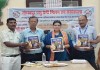
The meeting featured Dr. R.B. Chaudhary, Editor-in-Chief of the Chennai-based animal welfare science journal Pashu Mitra and former Scientist/Assistant Secretary/Chief Editor of the Animal Welfare Board of India, alongside Dr. Amarnath Jaiswal, representative of the Government of India's Animal Welfare Division and Scientific and Technical News Editor of Pashu Mitra. The experts presented a comprehensive report on the ongoing campaign, emphasizing how stray cattle in gaushalas could be better maintained by scientifically processing cow dung and urine into value-added products. Chief Minister Adityanath, recognizing the initiative's profound implications, inquired directly from the team: "What do you need from us?" This query reflected his proactive stance in supporting such endeavors, which he described as essential for societal welfare and cattle protection. He urged the continuation of the campaign with unwavering dedication and encouraged cattle rearers to adopt government schemes earnestly.
A key highlight was the impending inauguration of Uttar Pradesh's first liquid bio-fertilizer plant in Pilibhit district, constructed at a cost of approximately ₹20 lakh. This facility, utilizing cow dung and urine, is projected to generate at least ₹1 lakh in monthly revenue for the associated gaushala. The plant stems from insights gained during a symposium in Prayagraj, attended by 17 renowned scientists and experts nationwide. Copies of a special issue detailing the symposium's conclusions were presented to the Chief Minister, who expressed enthusiasm and committed to reviewing them. This development aligns with broader state efforts to integrate traditional resources into modern economic models, positioning gaushalas as hubs for innovation rather than mere shelters.
Chief Minister Adityanath's enthusiasm for strengthening gaushalas is rooted in a vision of holistic development. Under his leadership, Uttar Pradesh has prioritized cow conservation, viewing gaushalas as integral to rural economies. By harnessing cow dung and urine—abundant byproducts—the state aims to reduce dependency on chemical inputs, mitigate environmental degradation, and enhance agricultural productivity. Cow dung, rich in organic matter, serves as a base for compost and biogas, while cow urine emerges as a primary focus for producing bio-liquid fertilizers. These fertilizers, often formulated as "Jeevamrit" (a mixture of cow urine, dung, jaggery, and soil), enrich soil fertility naturally, promoting microbial activity and nutrient absorption without the harmful residues associated with synthetic alternatives.
The emphasis on cow urine-based bio-fertilizers addresses critical challenges in modern farming. Chemically intensive agriculture has led to soil depletion, water contamination, and health concerns from pesticide residues. In contrast, cow urine, containing urea, potassium, and growth-promoting compounds, acts as a natural biostimulant. Studies indicate it improves crop yields by 20-30% while reducing input costs by up to 50%, making farming economically viable for smallholders. This approach not only saves nature by minimizing chemical runoff but also yields healthier, tastier products free from toxins. For instance, vegetables grown with these fertilizers exhibit enhanced nutritional profiles and superior flavor, appealing to health-conscious consumers and commanding premium prices in organic markets.
The status of production and marketing of cow dung and urine-based products in Uttar Pradesh reveals a robust, expanding ecosystem. As of 2026, the state has established Panchgavya units—encompassing medicines, paints, and organic fertilizers—in all 75 districts, under the "One District, One Innovation" model. These units process over 54 lakh kg of cow dung daily, converting it into biogas, compost, and bio-fertilizers. Production has scaled significantly since 2022, with the government allocating ₹2,500 crore in 2025-26 for natural farming expansion across 23,500 hectares in seven districts. Gaushalas now produce formulations like Jeevamrit and Ghanjivamrit, with annual outputs supporting organic cultivation on vast farmlands.
Marketing efforts have been equally strategic. The NITI Aayog recommends capital assistance, brand development, and online portals for gaushala registration to facilitate sales. Products are marketed through cooperatives like IFFCO and UPL, with humic acid from cow dung fetching ₹80 per bottle and generating revenues like ₹10.7 lakh in pilot periods. In Pilibhit, the bio-fertilizer plant exemplifies this, aiming for ₹1 lakh monthly income by supplying to local farmers and exporters. Overall, the cow dung economy contributes to sustainable development, with global markets for derived products exceeding USD 10 billion, where India positions itself as a low-cost producer leveraging its 3 million tonnes of daily biomass.
A noteworthy advancement is the integration of advanced biorefinery technologies, as pioneered by Dr. Satya Prakash Verma, CEO and Founder of Nanoverse Biomaterials Private Limited. His research on "Integrated Sequential Commercial Production of Nanocellulose, Lignin, Humic Acid, Fulvic Acid, and Carbon Nanoparticles from Cow Dung" transforms ruminant biowaste into high-value nanomaterials. Cow dung, comprising 35-40% cellulose, 10-15% lignin, and humic precursors, is processed in a zero-waste biorefinery model, yielding products for industries like packaging, pharmaceuticals, and energy storage. Since 2021, Nanoverse has become the world's pioneer in this domain and the second-largest nanocellulose producer.
To formalize collaboration, an Memorandum of Understanding (MoU) was signed involving Nanoverse Biomaterials, non-governmental organizations, gaushalas, and the Pilibhit district administration. Monitored by the Uttar Pradesh Gau Seva Aayog, the MoU outlines key provisions: (1) Establishment of decentralized production units in gaushalas for bio-fertilizers and nanomaterials; (2) Technology transfer from Nanoverse for processing cow dung and urine into commercial-grade products; (3) Training programs for shelter staff and farmers on sustainable practices; (4) Marketing support through state channels to ensure revenue streams, targeting 25-60% gross margins; (5) Alignment with Sustainable Development Goals, including zero-carbon targets by 2050; and (6) Pilot implementation in Pilibhit, expandable statewide. This agreement ensures gaushalas generate income while advancing green chemistry and circular bioeconomy principles.
The economic ramifications are profound. Products like nanocellulose (USD 1.8 billion market, 20-25% CAGR) find applications in biocomposites and 3D printing, while humic acid (USD 0.9 billion, 12-14% CAGR) boosts organic farming. In Uttar Pradesh, this translates to rural employment, reduced plastic pollution, and energy self-reliance under models like "Har Gaon Urja Kendra."
In conclusion, Chief Minister Yogi Adityanath's engagement with experts exemplifies a forward-thinking strategy to empower gaushalas. By prioritizing cow urine-based bio-fertilizers and integrating biorefinery innovations via the MoU with Dr. Verma, Uttar Pradesh is poised to lead in sustainable agriculture. This not only generates revenue—potentially billions through multi-product chains—but also safeguards the environment, economizes farming, and delivers nutritious produce, embodying a harmonious blend of tradition and science.